
by Catherine Galanti
In early 2024, Loyola Marymount University’s Division I men’s and women’s rowing teams were among six varsity programs eliminated by the university.
In the next academic year, the team was reborn as a club program. They still had the boathouse, but very little else remained—not least of all, the athletes. Only a few of the former varsity members had stuck around to see the team into a new era, and after recruiting at the beginning of the school year, the roster was made up of almost entirely new faces: about a dozen freshmen who were looking for a new adventure, and me, a senior who hadn’t been in a shell since my first year of high school. To say it was a ragtag crew would be an understatement.
To some, the team’s change in status might have been a reminder of what had been lost. But to me, it was an opportunity for a fresh start. I’d had to step away from my high school team after a few injuries, and despite LMU’s varsity coaches trying to induce me to return to the sport throughout college, I was never quite confident that my surgically repaired knees could withstand a DI workload. But with months left in my academic career, here was a perfect opportunity—not only to return to a sport I never wanted to leave, but to contribute to the next chapter of a legacy and help build something bigger than myself.
I was one of the few upperclassmen on the team, and one of the few new recruits who had prior rowing experience. I felt the sense of responsibility keenly, and I found myself in a position where my peers and teammates looked to me as a leader. Just before the spring semester began, I was asked to serve as the captain of the women’s squad for the remainder of the year.
I won’t say that the process was always easy. There were plenty of interpersonal disagreements, struggles of getting enough rowers to put a boat out at practice every morning, and even a very memorable drive with the trailer where the men’s captain and I were informed of the speed limit while towing in California. But through it all, I discovered that leadership on the team wasn’t about putting up the fastest 2k, or even about not flipping the single. It mattered more to be the person who showed up without complaint, who listened when coaches gave insight, and who committed to putting time, effort, and energy into the team above nearly everything else.
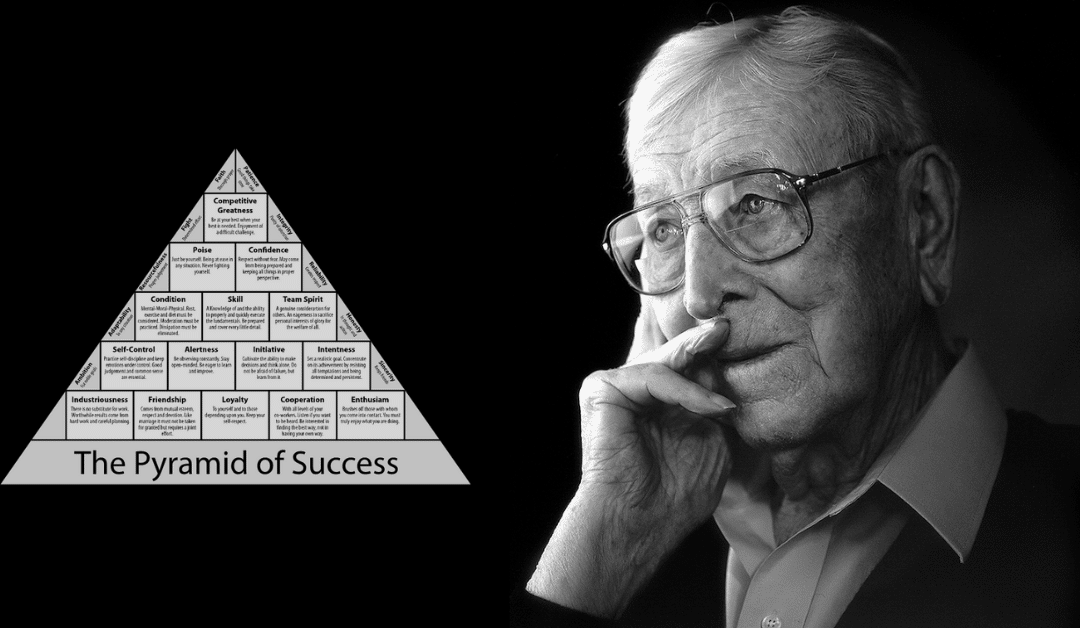
With this discovery, I found myself thinking about John Wooden’s principles of coaching, and especially his renowned Pyramid of Success. What stood out to me was that sometimes the simplest things make the biggest impact.
On the foundational level of the pyramid are the qualities industriousness, friendship, loyalty, cooperation and enthusiasm. I found loyalty and enthusiasm to be the values I was most drawn to.
Loyalty — To me, loyalty is closely intertwined with sacrifice. I sacrificed a lot for the team—sleep, time with friends, events with my other campus involvements, free time that most seniors spend all of college looking forward to—but I never saw that as a burden. The team was my top priority, and I wanted it that way. Anyone who knew me could tell you that there was nothing in my life that meant more to me than saying I was a member of the team, and how much being able to wear team and university gear meant to me.
Enthusiasm — Whenever I say this, rowers know exactly what I mean, and everyone else looks at me as if I’m crazy, but there’s really no bad day at the boathouse. Every experience I had—from a trip to urgent care after open blisters got infected, to early mornings, to erg tests, to yes, flipping the single (twice)—was a privilege. It meant I was able to participate in the sport I loved again, without taking anything for granted. It meant that I got to learn something new every day, no matter how minute. I learned to embrace all parts of it, even the parts other people didn’t.
The next tier of Coach Wooden’s model includes alertness and initiative.
Alertness — Being injured gave me the opportunity to continue learning, even when I was out of the boat. A lot of time on the launch allowed me to build deeper relationships with coaches and better understand what they were looking for when giving directions or making adjustments. I may never post a 7:45 2k—although hope springs eternal—but I credit my knowledge of technique and intangibles to all the time I was able to watch and learn. Alertness also became critical when taking on more of the responsibilities of being captain. Remembering details from prior conversations made it easier to keep up in meetings with university administrators, and I had a better idea of team morale and investment, as well as things we needed to work on.
Initiative — I always need some kind of project, and rowing provides a million, especially on a team that was still finding its footing. I found a lot of things to work on with my own conditioning, speed and technique, but there was never any shortage of areas of growth, both for myself and the team as a whole. Even something as simple as picking up a second-hand label maker made a difference in organizing the boathouse and making it a more productive space for us all. Taking on other projects like calling for information on replacement equipment felt empowering instead of tedious, because I knew it was something I could take off somebody else’s plate. Having a passion for learning and soaking up all things rowing also opened the door to getting other certifications. My boating license and Level I coaching cert were by no means prerequisites to rowing for LMU or becoming captain, but I wanted to find a way to give back even more to the team and rowing community.
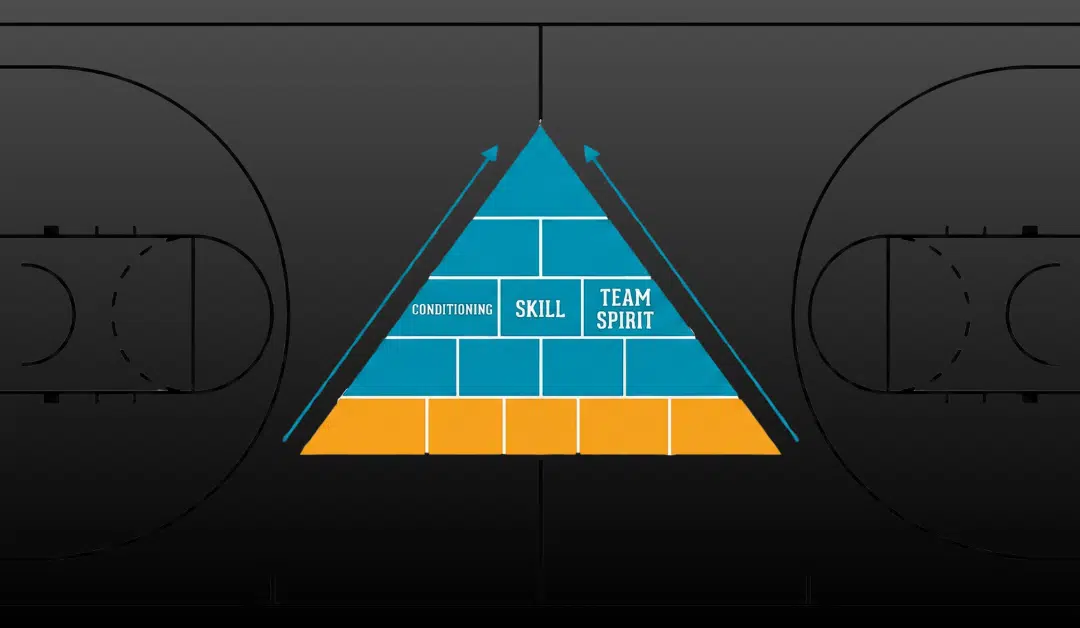
Lastly, and perhaps most crucially, I found myself drawn to the team spirit block of the pyramid.
Team spirit – Injury remained a big part of my rowing journey even through college, and there are a lot of ways that I wish I could have contributed more to the team physically. But through it all, I look back with a sense of pride on how I showed up for my team. Highlights of my season included going to the San Diego Crew Classic as a pseudo-team-mom and rigging fours single-handedly after practice when everyone else had to get back to campus for early classes (perks of being a senior). I found a way to be there however I could, even when my contributions were unconventional. If nothing else, my teammates knew I genuinely supported them, wanted them to succeed, and was there for them even when I couldn’t compete with them—that’s enough to be proud of.
Looking back, there are things I’m grateful for and things I wish I could change about my time with LMU. But another of Coach Wooden’s philosophies sums it up perfectly; I did my best to become the best that I was capable of becoming—and still am, even now.